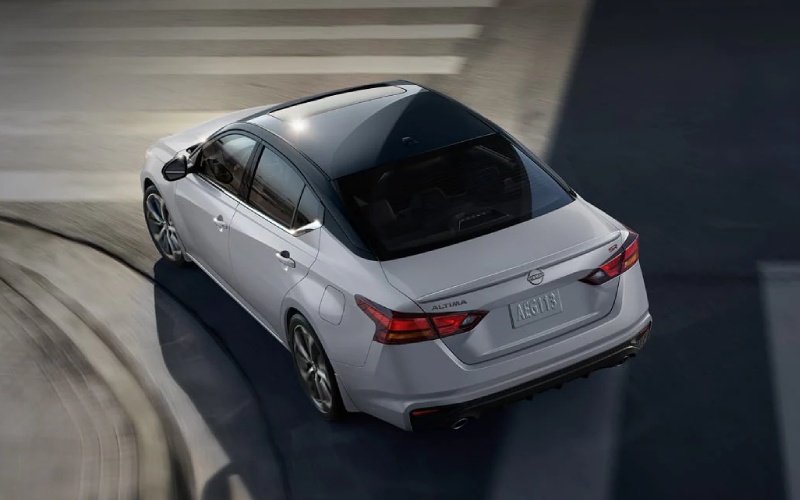
Montgomeryville Nissan - Comparing AWD in a midsize sedan around Warrington, PA: 2026 Nissan Altima vs 2026 Honda Accord?
When shoppers compare popular midsize sedans, one question routinely stands out: Do you really need AWD? The short answer depends on how and where you drive, but the longer explanation reveals why Nissan’s available Intelligent All-Wheel Drive on the 2026 Nissan Altima resonates with many drivers around Warrington, PA. In a region with quick weather shifts, painted crosswalks, and polished urban intersections, traction changes rapidly. An AWD system that can anticipate slip and route power smartly helps you launch smoothly and steer confidently, not just in winter but also in everyday rain and on leaf-covered backroads.
Honda Accord does many things right—its hybrid trims are responsive and refined, and Honda Sensing® brings an impressive list of driver-assistance features. Still, if you’re mapping daily life to frequent lane merges, angled driveways, or tight plaza exits, the difference between front-wheel drive and a responsive AWD system is something you feel. Nissan tunes Intelligent All-Wheel Drive to monitor wheel slip and distribute power proactively. In practice, that means steadier departures, more composed mid-corner corrections, and a calmer wheel in your hands when it’s slick, slushy, or simply damp.
All-weather readiness that shows up every day
AWD isn’t just for heavy snow. It’s about confidence when the surface changes suddenly—when a wet patch appears in a shaded curve or when you roll over paint lines at a low-speed turn. Nissan’s system reacts quickly to maximize grip while remaining unobtrusive, so there’s no learning curve—just a planted feel that makes busy driving less tiring.
- How AWD helps at launch: By sending torque to the wheels with the best traction, AWD reduces initial wheelspin and smoothly puts power down on slick surfaces.
- Why it matters mid-corner: When a surface changes mid-turn, an intelligent system balances power delivery to maintain stability and steering precision.
- Confidence in stop-and-go: Even at low speeds, subtle traction improvements help you pull away predictably and merge with less drama.
Visibility tools that amplify traction benefits
Traction is one piece of the puzzle; visibility is another. Altima’s available Intelligent Around View® Monitor adds a 360-degree camera perspective that can simplify tight parking and narrow-lane maneuvers. That situational awareness complements traction—because lining up a clean exit from a tight spot matters as much as holding grip in the rain.
- Set up a clean line of travel: Use the composite overhead view to confirm curb clearance before turning the wheel.
- Protect your wheels and tires: Side and front views help you avoid scrubbing a rim or clipping a low barrier.
- Reduce stress in tight lots: Clearer visuals make it easier to judge angles when visibility is limited.
Driver assistance that supports real-world driving
Driver-assist tech can reduce workload when tuned well. Nissan’s available ProPILOT Assist helps with lane centering and manages distance in traffic. That harmony—AWD for traction, camera tech for awareness, and assistance for lane and distance—adds up to a calmer commute. Accord’s Honda Sensing® is robust, with CMBS™, Lane Keeping Assist, and more. It’s a polished suite, yet the combination of Nissan’s AWD plus unique aids like Intelligent Forward Collision Warning, which can monitor up to two cars ahead, gives Altima a predictive edge.
How to decide if AWD fits your routine
Think about where you stop, start, and turn most often. Are you pulling out of angled driveways? Do you navigate speed bumps, roundabouts, and painted lines that stay slick after a storm? If yes, AWD can be a difference-maker. If your routes are flat, straight, and dry most of the time, you may value other features more—like a particular audio system, driver-display layout, or cabin finish. The point is to align the sedan with your daily life, not just a spec sheet.
Frequently Asked Questions:
Does AWD affect fuel economy?
Any AWD system adds some driveline complexity, but modern designs aim to minimize impact. For most shoppers, the extra traction confidence outweighs the marginal difference on paper—especially when conditions vary.
Can driver-assist features replace AWD?
Driver-assistance helps with awareness and steering or braking support; it doesn’t create traction. AWD works with these systems to help you maintain control when surfaces change.
Is a hybrid powertrain better than AWD?
They solve different needs. A hybrid focuses on power delivery and efficiency, while AWD focuses on traction. Your best setup depends on your commute and priorities.
When you weigh your daily routine—lots, ramps, merges, and unpredictable patches of grip—it’s easy to see why many drivers pick an AWD-equipped sedan. That’s why Montgomeryville Nissan highlights Altima’s available Intelligent All-Wheel Drive alongside its camera tech and driver assistance. It’s a combination that supports how people actually drive, especially across busy corridors and neighborhood cut-throughs.
Our team is proudly serving Warminster, Southampton, and Warrington with guidance that starts with your roads and routines. If AWD is high on your list, add visibility and driver assistance to your test-drive plan and judge the package together. You’ll feel the difference in the first few blocks.