Montgomeryville Nissan - Confident Stops Start Here — Expert Brake Service and Repair near Collegeville, PA
Your brakes are more than parts and pads — they are your vehicle’s most important safety system. Whether you are easing through the lights on Ridge Pike, navigating campus crosswalks by Ursinus College, or merging onto US-422, confident stopping power keeps every drive smooth and stress-free. If you are hearing a new sound, feeling vibration, or simply wondering when it is time for new pads and rotors, this guide explains what quality brake service includes, the signs to watch for, and how to plan maintenance that fits local driving around Collegeville.
At Montgomeryville Nissan, our certified technicians inspect, service, and repair braking systems on Nissan models and most other makes with the same care we use on our own vehicles. From quick brake checks to precise rotor machining and fluid service, we use factory-approved procedures, premium parts, and tools so you can hit every stop with confidence.
Local roads ask a lot from brakes. Stop-and-go traffic on Route 29, rolling terrain near Evansburg State Park, and frequent short trips around Providence Town Center all increase pad wear and heat cycles. That is why a routine inspection schedule — paired with timely repairs — is the simplest way to keep costs predictable and performance consistently strong.
How your brake system keeps you confident
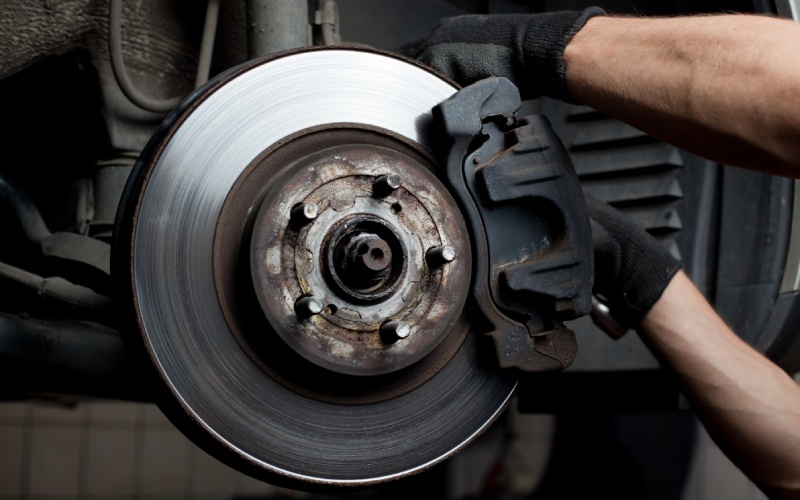
Modern brakes convert motion into heat with impressive precision. When you press the pedal, hydraulic pressure moves caliper pistons that clamp pads against the rotors. Friction slows the wheel, ABS helps modulate slip for control, and brake fluid transmits your input instantly — as long as everything is in good shape. Pads gradually wear, rotors can glaze or develop runout, hardware and sliders need to move freely, and brake fluid absorbs moisture over time. Professional service looks at the whole system, not just one part, so your pedal feel and stopping distance remain consistent.
Common signs your brakes need attention
You do not have to wait for a warning light to get ahead of brake issues. If you notice any of the following, schedule an inspection soon to protect performance and prevent larger repairs.
- Squealing during stops: Often a built-in wear indicator alerting you that pad material is low.
- Grinding or scraping: A sign pads may be worn through to the backing plate and contacting the rotor.
- Vibration or pulsation: Typically indicates rotor thickness variation or runout that merits resurfacing or replacement.
- Soft or spongy pedal: Could point to air or moisture in fluid, degraded hoses, or a hydraulic issue.
- Pulling to one side under braking: May reflect uneven pad wear, a sticking caliper, or tire/suspension concerns.
- Brake warning or ABS light: System diagnostics are needed to pinpoint and correct the fault.
- Burning odor after hard stops: Pads may be overheated — let the brakes cool and have them inspected.
Early diagnosis matters. Pads are designed to wear first — that is normal. Catching wear before it reaches the metal backing protects rotors, keeps repair costs contained, and maintains predictable braking feel in daily traffic.
What a professional brake service includes
Quality brake service goes beyond swapping pads. It should return your full system to reliable, quiet operation and verify safety-critical measurements. Here is what our technicians include and why each step matters.
- Comprehensive inspection and measurements: We record pad thickness, rotor thickness and runout, check caliper movement, hoses, fluid condition, and hardware integrity.
- Pad replacement matched to your driving: OEM-spec or equivalent pads selected for quiet operation, proper bite, and rotor compatibility.
- Rotor resurfacing or replacement: Machining within specification to correct minor imperfections, or replacement if below thickness spec or heat-checked.
- Caliper service and lubrication: Cleaning and lubricating slides and pins to ensure even pad wear and consistent release.
- New hardware where required: Fresh shims, clips, and abutment hardware to prevent noise and ensure proper pad fitment.
- Brake fluid testing and service: Moisture and boiling-point check, with a flush if contamination or age compromises performance.
- Precision torque and bedding-in: Wheels torqued to spec and pads bedded to establish even transfer layers for quiet, smooth stops.
Precise work pays off on the road. Correct rotor finish reduces noise, fresh hardware helps pads move smoothly, and a proper road test confirms confident pedal feel in the same stop-and-go scenarios you face every day.
How often to inspect and replace brakes
Brake longevity varies with route, load, and driving style. A commuter who spends weekdays cruising 422 may see different wear than a parent running short school trips and errands through Collegeville’s neighborhoods. As a baseline, have your brakes inspected at every tire rotation — typically around 5,000 to 7,500 miles — or at least twice per year. Pads commonly last 20,000 to 60,000 miles, while rotors can serve through multiple pad sets if thickness and runout remain in spec. Brake fluid benefits from periodic testing and is often replaced about every 2 to 3 years depending on moisture content and manufacturer guidance. If you tow, carry heavy cargo, or frequently descend hills, expect shorter intervals.
If you are planning a weekend away, a campus move-in, or a new commute pattern, a quick brake health check can offer extra peace of mind. Inspections are efficient and can be paired with oil changes or rotations so you spend less time in the service lane and more time enjoying the drive.
Practical tips to extend brake life
You can help your brakes last longer with a few simple habits. Leave a longer following distance so you can brake gently instead of late and hard. Look ahead on Ridge Pike for red lights or slow-downs and coast early. After descending a hill, give your brakes time to cool by driving gently for a minute. And keep tires properly inflated — traction and ABS performance depend on it.
Frequently Asked Questions:
How do I know if I need new pads or just a rotor resurface?
Start with measurements. If pad thickness is near its service limit but rotors are still above minimum thickness and can be machined within spec, a pad replacement plus rotor resurfacing is appropriate. If rotors are below spec, heat-checked, or heavily scored, replacement is the safer choice.
Do I really need a brake fluid flush?
Brake fluid is hygroscopic — it absorbs moisture — which lowers its boiling point and can cause a soft pedal after heavy use. If a moisture test shows elevated water content or the fluid is dark and contaminated, a flush restores responsiveness and protects internal components.
What is the difference between ceramic and semi-metallic pads?
Ceramic pads are typically quieter, produce lighter-colored dust, and handle heat well — great for daily driving. Semi-metallic pads often provide stronger initial bite and heat tolerance for heavier loads but may be noisier. The best choice depends on your vehicle, wheels, and driving patterns.
Why do my brakes squeal after a recent service?
Light squeal can occur during initial bedding as the pad and rotor surfaces mate. Proper shims, high-temp lubricant on contact points, correct rotor finish, and a thorough bedding process minimize noise. If squeal persists, a follow-up inspection can address hardware fitment or contamination.
Can I drive if the ABS light comes on?
Your base brakes still function, but anti-lock control may be disabled. Avoid hard braking, allow extra distance, and schedule diagnostics soon. A sensor, tone ring, or wiring issue is common — the sooner it is addressed, the safer your stops will be.
When your day involves quick runs between West Main Street and Germantown Pike or a steady cruise to work, consistent braking makes every mile feel easier. If you are due for an inspection or you have noticed new sounds, vibrations, or a warning light, let our team take a look. Online scheduling is simple, and our Express Service can accommodate quick brake checks as part of a multi-point inspection. We are here to help you stay safe and comfortable on every drive near Collegeville, PA.