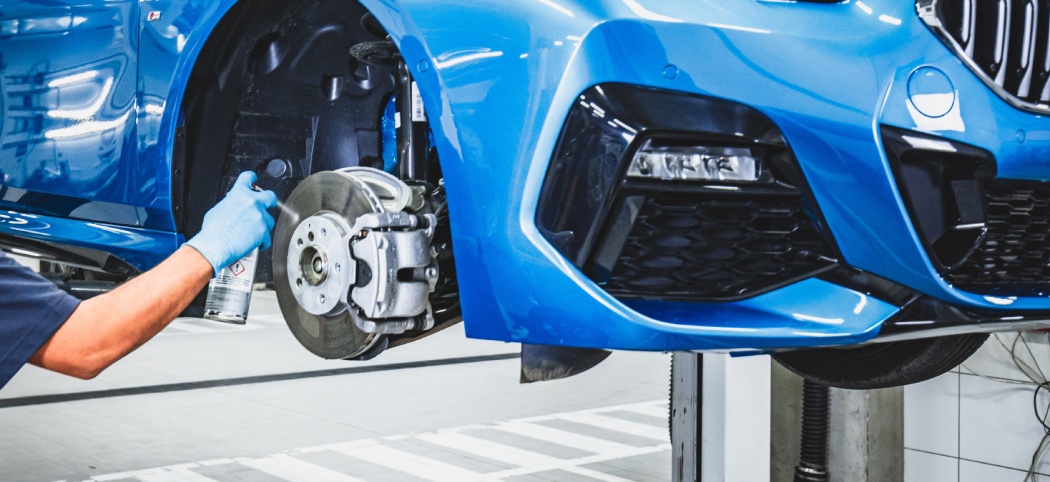
OEM vs Aftermarket Brake Pads: Expert Advice and Parts Support near North Wales, PA
Brake pads are small parts with big responsibility. Whether you drive daily across PA-309 on Bethlehem Pike, navigate school zones off Welsh Road, or head out toward the rolling roads of Montgomery County, your brake choice affects stopping distance, noise, pedal feel, rotor wear, and total ownership cost. OEM brake pads are engineered to the same specifications your vehicle rolled off the line with, tuned for your model’s ABS and stability-control calibration. Aftermarket pads span a wide spectrum, from economy formulations to track-ready compounds, each with trade-offs in dust, longevity, and bite. Understanding those differences helps you match a pad to your driving and budget without compromising safety. You will also want to consider local conditions like stop-and-go traffic, wet leaves in the fall, and potholes that can stress rotors and hardware. In this guide, we break down how OEM and aftermarket pads compare, how pad materials influence results, and the service support you can expect from a professional parts team. When you are ready for tailored recommendations, the parts professionals and certified technicians at Montgomeryville Nissan can help you select, order, and install the right pads for your vehicle and driving style, then road-test the result so your stopping power feels confident and consistent.
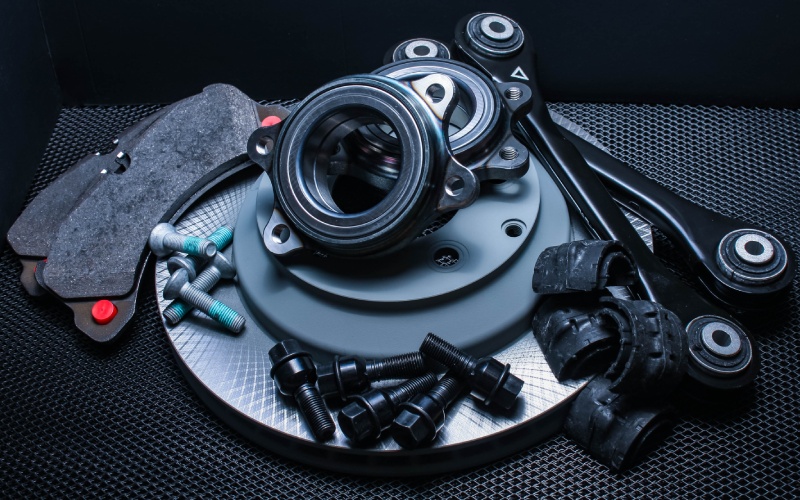
What Changes Between OEM and Aftermarket Pads
- Friction material: Ceramic, semi-metallic, and low-metallic NAO each trade off initial bite, fade resistance, dust, and noise.
- Fitment tolerance: OEM pads match factory chamfers, shims, and backing-plate dimensions for precise, quiet operation.
- Rotor compatibility: The wrong compound can glaze, groove, or overheat rotors, shortening service life.
- Noise and dust: Shims, slots, and compound tuning reduce squeal and brake dust that coats wheels.
- Pedal feel and modulation: How the pad builds friction under light and hard braking affects confidence in traffic.
- Certification and warranty: Look for FMVSS-135 compliance and manufacturer support that stand behind the part.
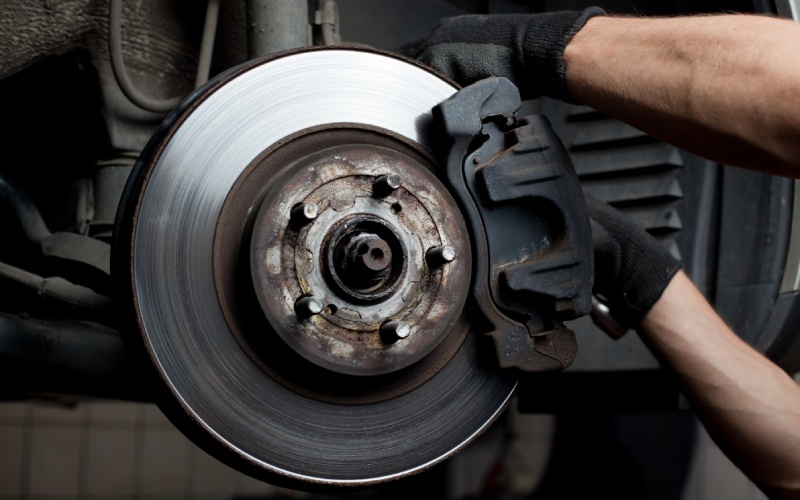
OEM pads are designed around your vehicle’s exact brake calipers, rotor metallurgy, and the way your ABS and stability systems expect the brakes to respond. That is why they typically deliver a quiet, consistent feel with minimal dust and predictable wear. Quality aftermarket pads can equal or exceed specific metrics, but they often shift the balance. For example, a semi-metallic performance pad may deliver stronger high-heat stopping at the cost of increased dust and rotor wear, while many ceramics stay cleaner and quieter with slightly less initial bite. If most of your miles are urban errands and commutes near North Wales, PA, a smooth, quiet ceramic or the OEM formulation is a great match. Drivers who tow, descend long grades, or brake hard may want a higher-friction compound with appropriate rotor pairing. EV and hybrid owners benefit from low-noise, corrosion-resistant options because regenerative braking reduces but does not eliminate pad use. The bottom line—choose based on how and where you drive, not just the box label.
Real-World Costs, Longevity, and Brake Feel
Total brake value is more than a sticker on the pad set. Pads that are too aggressive for your rotors can accelerate rotor wear, turning a simple pad swap into rotors-plus-hardware sooner than expected. Conversely, a pad that runs too cool for your needs can glaze, lengthening stopping distances and introducing pedal vibration. Consider the whole system—pads, rotors, hardware, and brake fluid. Many owners find OEM pads provide the best lifetime cost because they are tuned to minimize noise callbacks and rotor damage. Quality aftermarket pads can still be smart choices when matched carefully to your use case and installed with new hardware, proper lubrication, and correct torque. Brake feel also depends on professional installation and bedding-in. Proper bedding transfers an even friction layer to the rotor, reducing judder and squeal. Plan for routine inspections at tire-rotation intervals—about every six months—so tiny issues like seized slide pins, uneven wear, or a weeping caliper seal do not snowball. If you are ordering parts, having your VIN ensures the correct pad shape and hardware for your exact trim and build date. When it is time to install, look for factory-trained technicians using torque-calibrated tools and offering a multi-point inspection to verify lines, hoses, wheel bearings, and suspension components that affect braking stability.
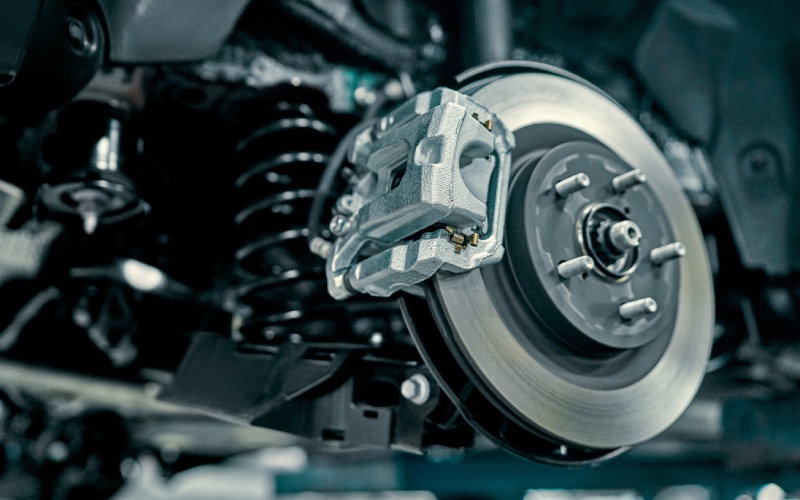
How Our Parts Department Helps—From Selection to Installation
- VIN-verified fit: We confirm pad shape, rotor size, and hardware for your exact model, trim, and build date.
- Genuine Nissan OEM options: Factory-spec pads and rotors that preserve intended pedal feel and system calibration.
- Quality aftermarket choices: Access to reputable brands and compounds tailored to commuting, towing, or performance.
- Certified installation: Factory-trained technicians replace pads, service slide pins, and torque to spec.
- Fast-track Express Service: Walk-in availability for brake inspections and related maintenance when timing is tight.
- Multi-point inspection: Complimentary checks help catch rotor hotspots, hose cracks, and fluid issues early.
- Convenient hours and amenities: Weekday and Saturday availability, lounge comforts, shuttle options, and online scheduling.
- Insurance coordination and delivery: We work with major insurers and can coordinate parts logistics when needed.
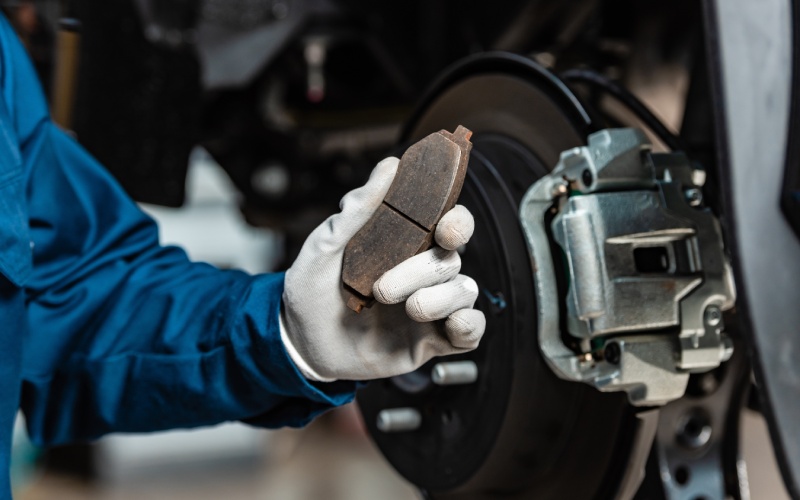
Your ideal brake setup starts at the parts counter, where specialists translate your driving profile into the right friction formula and rotor pairing. From there, certified pros handle installation details that matter—cleaning and lubricating contact points, replacing anti-rattle clips, verifying rotor runout, and torquing wheel fasteners evenly to protect hub components. The result is smooth, quiet stops and even pad wear across both axles. If you are balancing budget with performance, our advisors can compare OEM and vetted aftermarket options, outlining expected lifespan, dust characteristics, and how each will feel under light and hard braking. Expect a transparent process—VIN verification for accuracy, clear timelines for special orders, and status updates from drop-off to test drive. Whether you schedule ahead or use Express Service for an inspection and consultation, our goal is to keep your day moving and your braking consistent. When needed, we can align related services—tire rotation, alignment checks, or fluid exchanges—so everything that touches stopping distance is dialed in at once. The parts-to-install handoff stays seamless, and you roll out with confident pedal feel and documentation for your maintenance records at Montgomeryville Nissan.
FAQ: OEM vs Aftermarket Brake Pads and Parts Support
Are OEM brake pads safer than aftermarket?
Both must meet federal safety standards. OEM pads are tuned to your vehicle’s ABS and stability-control calibration, so they typically deliver predictable pedal feel, low noise, and consistent stopping. Quality aftermarket pads can match performance when chosen and installed correctly.
How often should I replace brake pads?
There is no single mileage number. Inspect pads at least every six months during tire rotations. Replace when the friction material nears the service limit, you hear a persistent squeal, feel pulsation, or notice longer stopping distances.
Can I upgrade pads without changing rotors?
Yes, if the rotors are within thickness specs and runout is minimal. However, a new compound may require fresh rotors for optimal bedding, reduced noise, and even wear—your advisor will measure before recommending.
Will aftermarket pads void my warranty?
Using aftermarket pads does not automatically void a warranty, but any failure linked to an incompatible part may not be covered. Keep documentation and choose reputable, vehicle-appropriate parts.
Do you install customer-supplied pads?
Policies vary by job scope and part source. Our team can source OEM and vetted aftermarket pads, confirm fit by VIN, and provide installation with a multi-point inspection for a streamlined result.
Do you service brands beyond Nissan?
Yes. Our facility services most makes and models, including EVs, and provides brake inspections through Express Service with no appointment needed.
Ready for Confident Stopping Power? Schedule or Visit Today
Your brakes are mission-critical, and there is real value in getting parts and installation right the first time. If you commute near North Wales, PA, or across Montgomery County’s busy corridors, a matched set of pads and rotors can shorten stops, quiet squeal, and protect your investment. Start by calling our Parts Department at 267-668-2922 with your VIN for an exact fit, or use our online request to outline your needs. Prefer to talk it through in person? Visit us at 991 Bethlehem Pike, Montgomeryville, PA, for a face-to-face consultation and options that fit your driving and budget. You can schedule installation online or stop in for an Express Service brake inspection to get quick, expert eyes on pad thickness, rotor condition, and fluid health. We are open weekdays with Saturday availability to make maintenance fit your life, and our multi-point inspection helps you plan ahead with confidence. When you are ready, our advisors will present clear, side-by-side OEM and aftermarket choices, then coordinate certified installation and a road test. For dependable pedal feel and quiet, consistent stops, contact Montgomeryville Nissan today and let our parts-and-service team get your braking system dialed in for the miles ahead.